WWII Dog Tags
WWII Military Dog Tags & Identification Tags
Soldiers received dog tags and identification tags during World War II to help medical personnel identify them after injuries or deaths. The small metal identification tags served as neckwear through a chain and displayed essential soldier information including their name along with service number blood type and religious preference. Medical personnel and casualty reporting operations relied heavily on these tags for their crucial function.
During World War II every country created its own individual design for dog tags which followed specific formats:
United States:
During early stages of World War II American dog tags displayed rectangular shape with rounded ends while featuring a notch for proper alignment in embossing devices. The dog tags contained four categories of information: name along with service number followed by tetanus vaccination date and blood type and religious affiliation marked as P for Protestant C for Catholic or H for Hebrew. The war brought changes to dog tag design when the manufacturers removed the notch feature and started developing new formats.
Germany:
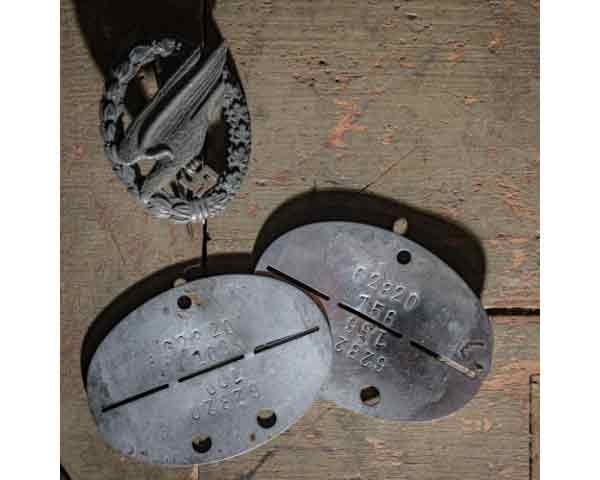
The German Wehrmacht used Erkennungsmarke—a large oval disc made of aluminum or zinc, perforated in the center for easy breaking. The two stamped sections displayed the same information including unit designations together with soldier numbers. When a soldier died the body kept one piece of the Erkennungsmarke while the other half went to headquarters for recordkeeping.
Great Britain:
British soldiers normally carried two round fiber tags that were one red and one brown-green. Soldiers received stamps which included their name together with their service number and religious affiliation and branch designation. The military kept one piece of the identification tags with dead soldiers and collected the other half.
Soviet Union:
During the early stages of World War II the Red Army did not have standard dog tags in use. The introduction of small metal capsules containing handwritten or stamped information on paper slips became widespread throughout the middle of the war period.
Japan:
Japanese military personnel used stamped metal tags bearing kanji characters which included their regiment along with their service number. The distribution of identification tags was not uniform throughout all units so some troops used alternative items for identification purposes.
The World War II dog tags function as valuable items which collectors and historians together with veteran family members seek to possess. The historical artifacts serve as individual pieces of wartime history which establish immediate links to soldiers' wartime experiences and their ultimate sacrifices. People seek authentic World War II items from this period because of their historical worth which determines their market value through factors including condition and rarity and provenance.