

WW2
SKU:
Original/Reproduction:
Availability:
Manufacturer:
Date Manufactured:
Model:
Serial Number:
Caliber:
Action Type:
Barrel Length:
Bore:
Grips:
Condition:
Price:
Seller Type:
Seller ID:
Seller Code:
Return Policy: 3-day inspection and return policy on used guns and accessories.
Description:
History:
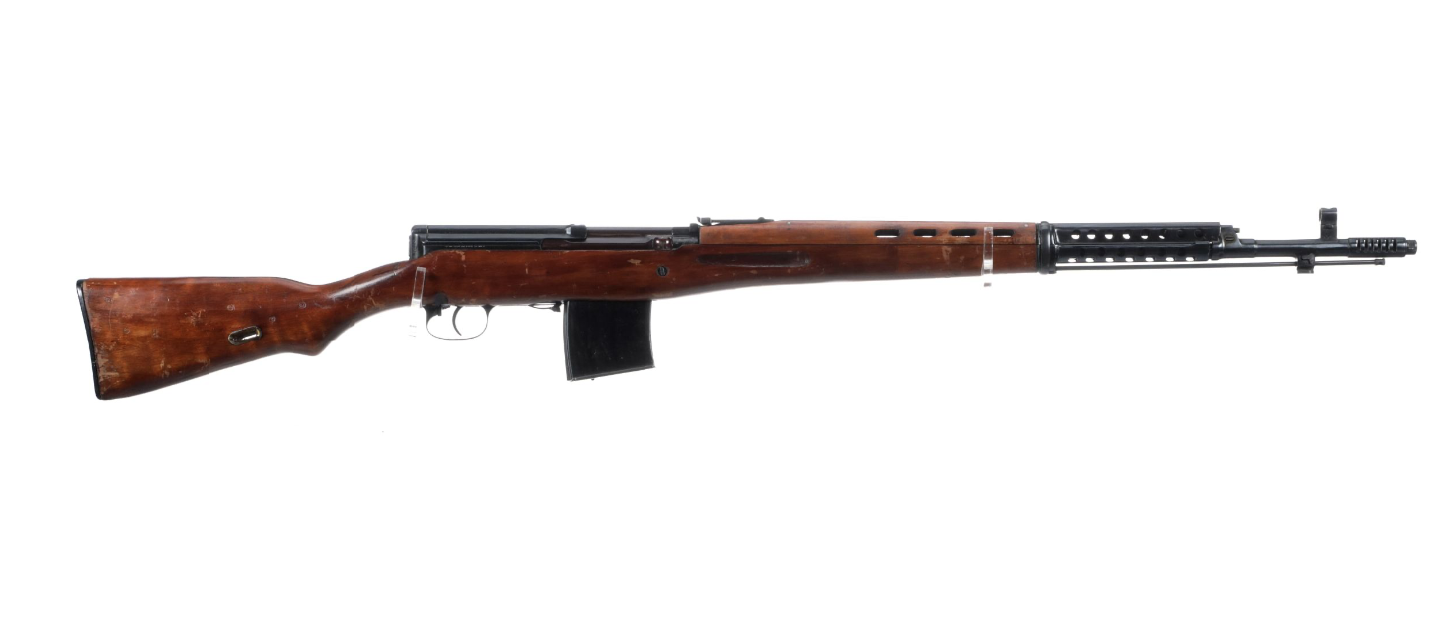
The semi-automatic Tokarev SVT-40 is often overlooked in the history of Eastern Front weaponry—not because it lacked innovation, but because its potential was cut short by the realities of war. Comparable in concept and capability to the American M1 Garand, the SVT-40 represented the Red Army's push toward modernized infantry firepower.
Conceived as a replacement for the antiquated Mosin-Nagant bolt rifle, the SVT-40 was lightweight for its type, had a 10-round detachable magazine, and provided faster second shots—an asset on any battlefield. However, when Germany invaded with Operation Barbarossa in 1941, the Soviet Union required simplicity, ruggedness, and quantity more than anything else.
Despite its promise, the SVT-40's complexity and maintenance requirements were unrealistic for a rapidly mobilizing and sometimes poorly trained army. Production was halted, factories were moved, and priority once more went to the simpler Mosin-Nagant and subsequently the PPSh-41 submachine gun.
In the end, the SVT-40 was the rifle that the Soviets wanted—a reflection of modern warfare and industrial ambition—but not the rifle that they needed in the dire early years of World War II.
Design and Features
Collector's Note